OK so now it’s time to talk to potential customers about your software and you’ve taken the decision to lead the line with Founder led sales.
As this book is aimed mainly at first time or technical Founders for whom selling software doesn’t come as second nature, we thought we’d include a workbook about the most effective sales methodology we’ve seen and used over the last two decades. And even if you’ve been trading for several years, a refresher here wouldn’t hurt.
The critical lesson to learn when talking to customers is how to fact find effectively and understand the importance of deep dive discovery before demo. There’s a whole host of information you need to uncover from your prospect and you’re going to need a path to follow.
You may already be familiar with the sales methodology MEDDICC, but in case you haven’t come across this before we feel this might be a useful acronym for you to understand in the early Founder led sales days.
This is a defined methodology you can follow that will not only significantly stack the odds in your favour of only closing a sale, but also speeding up the time to signature.
How Richard learned his lesson
‘It was the summer of 2012 and I remember sitting in a meeting led by the Sales Director of the software business I was running in the social housing sector. We’d just completed our first double and were now running at about £2m ARR per annum. I’d set the business the target of achieving a triple – up to £6m of revenue – in the next 24 months. I’d been the CRO before I’d been asked to take on the CEO role by the Board and I thought I knew everything there was to know about sales – how wrong I was.
I’d hired as my replacement in the sales leadership role, someone who had once sold to me a few years back. I’d been so impressed by the way he’d factfinder me, checking every aspect of my internal buying process and leaving no stone unturned. I knew I was being sold to but somehow, I couldn’t stop myself from saying yes to everything he asked of me. It was an outstanding sale, and he’d left a real impression on me. I’d learned the leadership lesson many years earlier to always be hiring, even when you don’t have a vacancy and I’d kept this guy’s details on my phone. When I’d needed a sales Director, he was my man.
I was sitting at the back of a conference room, listening to him taking the sales team through his strategy for achieving the triple and the sales methodology he swore by. It was the first time I’d heard the term MEDDICC and a detailed explanation of what each letter of the acronym stood for. I also realised it was the methodology he’d used when he’d taken £70,000 per annum off me for the software, he was selling in is previous role!’
As we said, you may be very familiar with this methodology, but just in case you’ve never heard of it, this acronym will help guide you through your first fact find ensuring you uncover all the information you need to make a sale. It’s well worth the while learning this by heart.

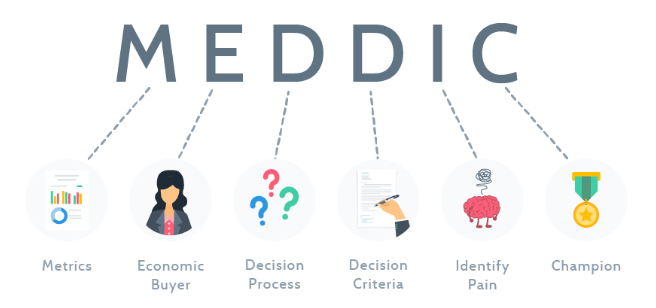
MEDDICC – the ultimate sales methodology
METRICS – the financial business outcomes you’ve delivered for your existing customers (M1) (‘on average we’ve saved our customers 30 hours of processing time per week’) and the financial metrics you have personalised specifically for your customer (M2) (‘from the work we’ve done with your team we believe we can help ship your products 60% faster adding £200,000 of top line revenue to your business.)
ECONOMIC BUYER – The person with the overall authority in the buying decision. He or she can say yes when others say no and have the veto to push the project forward or stop it if needs be. But they hold the budget, and the cost of your solution will come out of their annual pot. This is the most critical persona to identify in your sales journey and we’ll discuss this more below.
DECISION CRITERIA – does the solution technically meet the requirements of the business, is it economically viable from a perspective of finance, risk and efficiency and do the values and direction of each organisation match. You need to ask questions that answer all these potential objections.
DECISION PROCESS – the series of steps that the Economic buyer will follow to make a decision. Who is involved in evaluating, selecting, and purchasing your software. How and where will the decision be made? Will this decision be made a Board or departmental level for example?
IMPLICATE THE PAIN – we’ve covered off customer pain in the first chapter, but this is the visceral problem the customer has that is serious enough to need a solution. Very often this is a financial, efficiency or people pain – ideally all three. You’ll have your Pain Statement to hand for this.
CHAMPION – an individual who has power and influence in the organisation but probably not budget sign off. They will certainly act as an internal seller for you and will have a vested interest in your success. This is a critical persona as they will literally champion the purchase of your software through the business and ideally introduce you to the right people. They’ve seen the light you’re shining and understand the merits of your solution. But critically they are very often not budget holders. You have to get to the Economic Buyer.
COMPETITION – this is any person, vendor or initiative that’s competing for the same funds or resources as you. Don’t forget your biggest competition may be not simply be other rival solutions. It could be other projects they are running that require the same funds or resources, or they may decide to build the solution internally. Finally, the biggest competition sometimes is simple Inertia. We’ll talk about this later in the workbook and the other headwinds you’re going to experience.
If you’d like to know more about MEDDICC there are dozens of online courses and personally I’d recommend www.meddicc.com as a very good place to start.
The critical importance of customer research
Richard continues, ‘What I realised in that sales meeting, was after more than 20 years of selling, my fact finding, and research had been far too shallow. I hadn’t understood the importance of understanding how the decision on whether to proceed with my software sale was made, nor which people were involved in the process.
I needed to get better in particular at establishing who the Economic Buyer was and for far too long I’d been selling to Champions who didn’t have the budget. MEDDICC taught me that simply building a business case and evidencing the value I had bought to other customers, was simply insufficient. I had to dig deeper, I had to obsess about customer pain, and I needed to ask far more detailed questions about who was going to sign off the ultimate budget. I had to understand where decisions were made (be they at departmental or Board level) and what other projects in the pipeline might affect the adoption of my solution. For the business I was running, the adoption of MEDDICC across the sales organisation was the single biggest reason we ultimately achieved our desired triple to £6m ARR.’

Once you become fully conversant with the MEDDICC sales methodology, you will be able to build a far more detailed fact find that will help you navigate your way through all your customer interactions. As the leader of the business, it will also provide you with a framework and vocabulary with which to manage the Sales function and particularly forecasting. It’s not our intention in this book to dive any deeper into this methodology, except to highlight one critical component.
And that is to highlight the importance of truly understanding who the Economic Buyer for your software is.
How can you recognise Economic Buyers?
The challenge right from the get-go is you won’t find the job title of Economic Buyer on LinkedIn and businesses don’t refer to this role internally. This means you are all alone in finding out who they are and sometimes this isn’t as easy as it looks.
The starting point is normally to find your internal Champion, someone who has seen or heard about your product and is keen to learn more. This could be a department head, or simply a member of the team who is looking to solve a broken process. The biggest nota bene here is that Champions do not often have the budget to pay for your solution and therefore you have to ask a set of well-crafted questions to find out who ultimately will foot the bill. Champions are vital as they’ll be a valuable internal fan, but they’ll need to steer you in the right direction.
Simply stated, the Economic Buyer is the person who owns the budget – it’s their annual pot that your costs will come out of. They may well have access to discretionary funds too that aren’t budgeted, but they will have ultimate profit and loss responsibility. It’s not the person who may like your software the most within your target customers, nor indeed be the primary user. But it is the person who’s challenging business problem you’re going to solve and who ideally will get the credit for making the purchase. They will sign your contract or at the least be part of the approval process leading to signature.
So, what’s the best way to discover who the Economic Buyer is in an organisation? It’s often not an easy process and will require skill, patience, and perseverance. Your Champion will play an important role here and should be able to help you identify and engage with the Economic Buyer. If for any reason your Champion is unable or refuses to introduce you, you should see this a major red flag to winning the deal. But let’s assume for now your Champion supports you in this process and sets up the meeting.
Here’s where the challenge really begins. A novice salesperson here might well fall into the fatal trap of becoming a walking PowerPoint and use this as an opportunity to show off the software. Please, please don’t do that. We have and it never works.

This is your opportunity to impress upon the Buyer that you are someone that can bring value to them which means you have to start talking in their language. You have to be consultative and skilfully ask a set of questions to help unearth their business objectives and the outcomes they are trying to achieve. You’ll score a real bullseye if you can uncover their personal objectives for the year. In other words, do they have a resolution for the problem that your solution solves in their core OKRs for the next 12 months? If so you’re in with a fantastic chance of securing the deal.
The art of powerful questions during the first meeting
All this comes with delicate and careful questioning and stacking the odds in your favour by doing your research properly. Can you find any clues in their annual report, or have they written anything on LinkedIn about the subject in the past? Can your Champion give you any inside knowledge or anyone else in the business? Getting to truly understand the pains and problems of your Economic Buyer is vitally important to making a successful sale.
Use the MEDDICC methodology to build a fact find ahead of that first meeting and give yourself a set of answers you need to uncover. As well as their business (and personal) objectives for the year, we need to find out about budget for example. Have they assigned budget in this financial year to solve this challenge or would discretionary spend need to be found? Who will make the final call, would it be your Economic Buyer or does this decision need to go to the Board? What other possibly conflicting projects do they have running internally that may delay you getting the go ahead.
This first meeting must be viewed as a fact-finding mission that covers off every aspect of MEDDICC. Only once you’ve done your questioning and understood the nuances your particular prospect faces, can you tailor your demonstration to solve them on the next call. You can absolutely reference other organisations you have helped solve similar problems on the first call and the results you achieved. But this is not a demo meeting. That comes later.
Find out everything you can
Once you know who your Economic Buyer is, read up everything you can about them. Obviously, LinkedIn is a great place to start. What blogs have they written and which posts have they liked? Who do you have as connections in common and which events have, they attended or spoken at? What interests do they have that you might have in common? All this research helps build that all important credibility and connection. They will love the fact you’ve read their stuff and will appreciate the research you have done.
One final thing to check which maps in to what we learned in Workbook 1. You may already have a clear idea about who your Economic Buyer is, but also consider looking around the rest of the Board Room table (virtually) and seeing if your solution solves anyone else’s challenges too. The CFO is often a persona who will take an interest especially if your solution involves saving money or improving processes. This doubles in importance if you establish that the ultimate decision on go or no go will need to be made at Board level. We might need some extra hands around the table to be raised.
How to handle objections (you’ll definitely get some!)
One of the best sales managers we ever worked with taught that making a sale was like walking down a long tunnel with exits along the way to both the left and right. Making a sale is ensuring that you and your customer walk the entire length of the tunnel and at no point leave via one of the escape routes. He described these exits as any one of the reasons why your customer might not buy, such as the objections they might have due to cost, functionality or others in the organisation objecting to the purchase.
He taught that rather than ignore these escape routes or hurry past them, you should show your customer that they exist, but at each exit explain how and why that didn’t need to be a problem. For example, if you know that your customers CTO is going to have an important say in whether he or she can buy your solution, you need to embrace this and ensure the technology team are kept very much in the loop along the journey. Objections needs to be embraced and indeed pointed out to your customer along the way even if they haven’t yet thought of them.
The headwinds you’ll face
It’s paramount throughout this process that you keep the headwinds and objections that you’re going to face in nearly every sale at the front of your mind. Rather than dismiss these, or ignore them, you need to confront them in every stage of the sales process. Face them head on and build them into your sales process. And, as suggested before, make mention of them all (with the answers) on your website.
Let’s take a look at the top six headwinds you may well face when walking your customer through the buying tunnel.
- Number one will be inertia. This is perhaps the single biggest reason why new software implementations are not preceded with. Your customers will say that they’re too busy and simply don’t have the time or energy to install your solution. It’s easier to do nothing. It’s too much hassle to rip out their existing software and replace it with yours.
Every software salesman in the world will recognise this challenge and it’s very often the hardest one to conquer. This is why we place so much emphasis on creating a pain statement that laser focuses on visceral customer pain. The problem that they have in their organisation needs to really hurt and you need to keep reminding the customer of that pain at every stage. As we discussed earlier in this book, your value proposition needs to be sharp and you need to comfort your prospect with the fact that either the implementation will be incredibly slick and effective or if it is going to take some time, the end result will be worth it. But you must go into every sale knowing that inertia could be one of the biggest blockers you have.
2. Interference from the technology team. If you’re going to sell a technology solution to an organisation, you must understand that the technology team will have a vital role to play in the successful purchase of your software. CTOs quite rightly protect their delicate IT infrastructure like a parent care for a child and if your software could potentially upset their delicate ecosystem, it will be rejected immediately.
So, you have to go into your buying process fully cognizant of the fact that the technology team at least need to be involved and at best equally convinced of your product’s value. Don’t shy away from the technology team as they could become important evangelists. They work on the basis of logic and reason and if you’ve built enough evidence that you can improve a broken process, they will listen.
3. “We can build this ourselves”. Closely aligned to interference from the technology team is push back from IT saying that they have the skills to build something similar to your solution themselves. This is as frustrating as it is inaccurate. Unless the team are prepared to find the same number of hours it took you and your team to research and then build your solution, this simply isn’t going to happen.
We’re yet to meet an IT team which isn’t deluged with work. They have an extensive list of delayed projects which they need to implement first, and they certainly don’t have time to build a solution as powerful as yours. But again, you need to embrace this, and you need to show your customer as part of the sales process that this is an objection or feedback they may receive.
4. Other internal projects. Part of the MEDDICC methodology is to find out what other projects your customer is delivering and what impact these may have on the adoption of your technology. They might absolutely love the solution you’ve presented, but time and budget pressures mean the installation has to be delayed. You must find out about what else is going on in the organisation, again by asking thoughtful questions, as other projects may well delay signature on your contract. As an example, we can’t tell you the number of times we’ve heard that the organisation is moving to Microsoft Dynamics, a seemingly unending project which slows down the entire organisation and makes the adoption of your solution almost impossible.
5. Excel. This is a big one. Whatever process you’re looking to improve will probably currently being run on Excel. You need to explore how this is working for the team and the time and inefficiency it may be bringing. The challenge is that people are hooked on Excel and weaning them off it can be extremely difficult. At the very least you need to be aware of Excel as a competitor to your solution and you need to clearly evidence how you can deliver better results with significantly less effort.

In conclusion, sales in their embryonic phase are so much more about factfinding and building empathy than demonstrating your solution. Adopting MEDDICC will give you a track to run on to ensure you have all the information you need to understand whether your customer is likely to buy and how long it might take to get to signature. It’s an invaluable tool if you’ve not sold before so well worth the study time needed.
Workbook Summary
- Spend time learning the MEDDICC methodology – it’s a great format to follow and ensures you capture every item of information you’ll need to help you navigate through the sale.
- It’s critically important to recognise the difference between an Economic Buyer and a Champion. The former has budget, and the latter has passion for your software, but do recognise the difference between the two.
- Do your background research on your Economic Buyers and uncover what makes them tick. Find out (if you can) their annual objectives and see where you solution can match up.
- Don’t shy away from the objections you’ll face in fact walk your buyer down the sales tunnel and show them the exits and why they need not be worried.
- Be very aware of the headwinds you’ll face in any sale and build them in to your pipeline forecasting. They’ll all need to be faced down at some point.
Ready to ignite growth for your
B2B SaaS business?
Hyper growth for your business is just around the corner. Submit the form and the Vencha team will be in touch as fast as humanly possible.
We're excited to begin this journey with you.